
Quick answer: Metamerism is when two samples look like a colour match under one light source (say, daylight) but clearly differ under another (shop lighting, fluorescent tubes). The cause is different spectral reflectance curves. The control: measure with a spectrophotometer under several standard illuminants and formulate for a spectral match.
Why does metamerism happen?
The colour we see depends on three things: the light source, the object (its reflectance curve) and the observer. Two samples made with different colourants can produce the same colour perception under one specific light source — but change the light and the different reflectance curves pull the colours apart. This is the classic trap of matching colour by eye: you hit the match under the lab lamp, then it drifts in real-world light.
Types of metamerism
- Illuminant metamerism: the most common — a match under one light, a mismatch under another.
- Observer metamerism: two people judge the same pair differently because of differences in their vision.
- Geometric/surface metamerism: a match at one viewing angle but a mismatch at another, common with effect coatings.
How to detect and control it
The human eye is unreliable for judging metamerism. Use a spectrophotometer and:
- Measure sample and standard under multiple illuminants (D65 – daylight, A – incandescent, F11 – fluorescent) and compare ΔE under each.
- Check the metamerism index (MI): the smaller the MI, the more stable the pair is when the light changes.
- When formulating, aim for a spectral match — the sample's reflectance curve tracking the standard's — rather than a match under a single light.
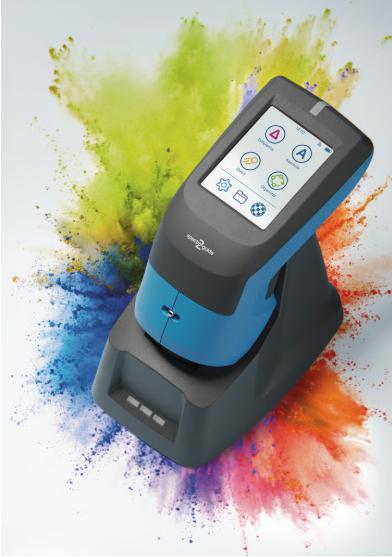
Instruments like the Spectro2guide store the full spectrum and compute ΔE under several illuminants at once, so you can spot metamerism right on the shop floor. See also: What are SCI and SCE?