
Quick answer: ΔE (Delta E) is a single number telling you how different two colours are. The smaller the ΔE, the closer the match. As a rule of thumb, ΔE ≈ 1 is where the eye starts to notice a difference (depending on conditions).
How is ΔE calculated?
ΔE combines differences in lightness (ΔL*), red–green (Δa*) and yellow–blue (Δb*) into one value. That gives you a single pass/fail criterion instead of reading each component separately.
ΔE*ab vs ΔE00
ΔE*ab is the classic, simple formula. ΔE00 (CIEDE2000) is corrected to track visual perception better, especially in saturated and dark colours. Many industries now prefer ΔE00.
What ΔE is acceptable?
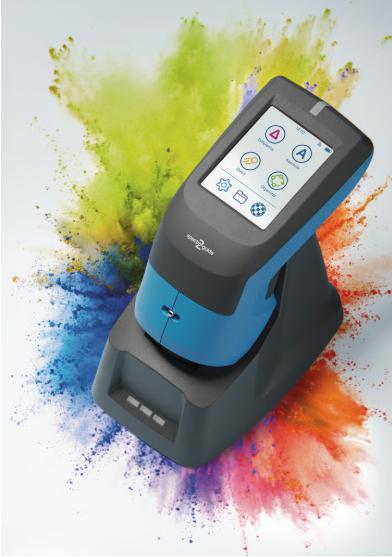
There's no universal number — it depends on industry, material and customer requirements. Set a suitable pass/fail tolerance and apply it consistently. On-instrument QC software such as Spectro2guide sets and tracks ΔE automatically.