
Quick answer: SCI (Specular Component Included) measures colour with the specular (gloss) reflection, so it reflects the material colour almost independently of the surface. SCE (Specular Component Excluded) removes the specular reflection, so it reflects the appearance as the eye sees it. Integrating-sphere d/8° instruments measure both at once.
What is SCI?
In SCI mode the instrument includes the mirror-like reflection from the surface in the measurement. As a result, two samples with the same colour formulation but different gloss (one glossy, one scratched or matte) read almost the same. That makes SCI ideal for formulation and material colour control — separating the colour from the surface effect.
What is SCE?
In SCE mode the instrument excludes the specular reflection. The result matches what the eye sees: a matte surface reads "greyer/duller" than a glossy one of the same formula, and SCE captures that difference. SCE is right when you are judging the product's final appearance.
When to use SCI vs SCE
| Criterion | SCI (gloss included) | SCE (gloss excluded) |
|---|---|---|
| Reflects | Material colour | Colour as the eye sees it |
| Effect of gloss/surface | Low | High |
| Use for | Colour matching, formulation control | Appearance evaluation |
Many plants measure both: SCI to control the formula in the lab, SCE to confirm the appearance meets the customer's expectation. The key is to stick to one mode when comparing — never mix SCI and SCE within the same tolerance.
SCI/SCE and instrument type
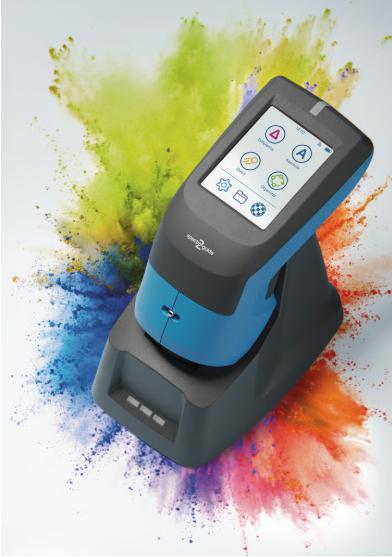
Only integrating-sphere d/8° instruments offer SCI/SCE (by opening/closing the gloss trap); 45°/0° instruments already exclude specular reflection, so the term doesn't apply to them. See also: 45°/0° vs d/8° geometry and Choosing the right spectrophotometer.