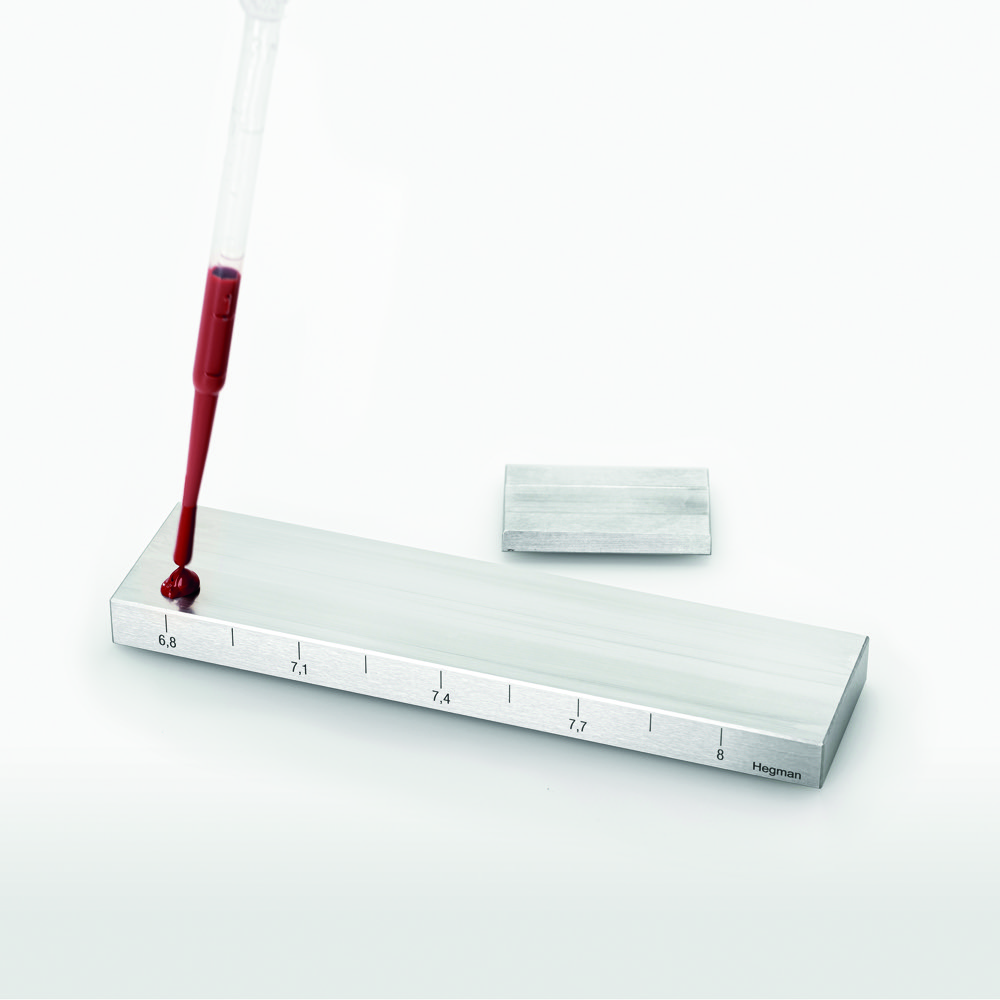
Fineness of Grind Gauge (Hegman)
Determines the fineness of grind and detects coarse particles or agglomerates in a dispersion, on Hegman and mil scales.
Overview
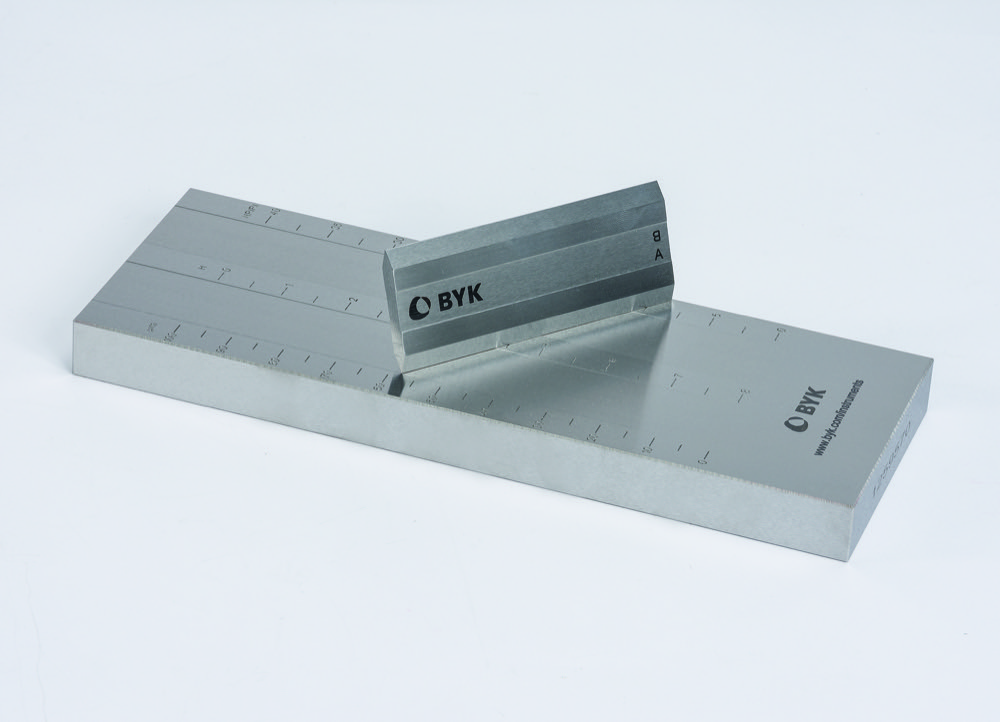
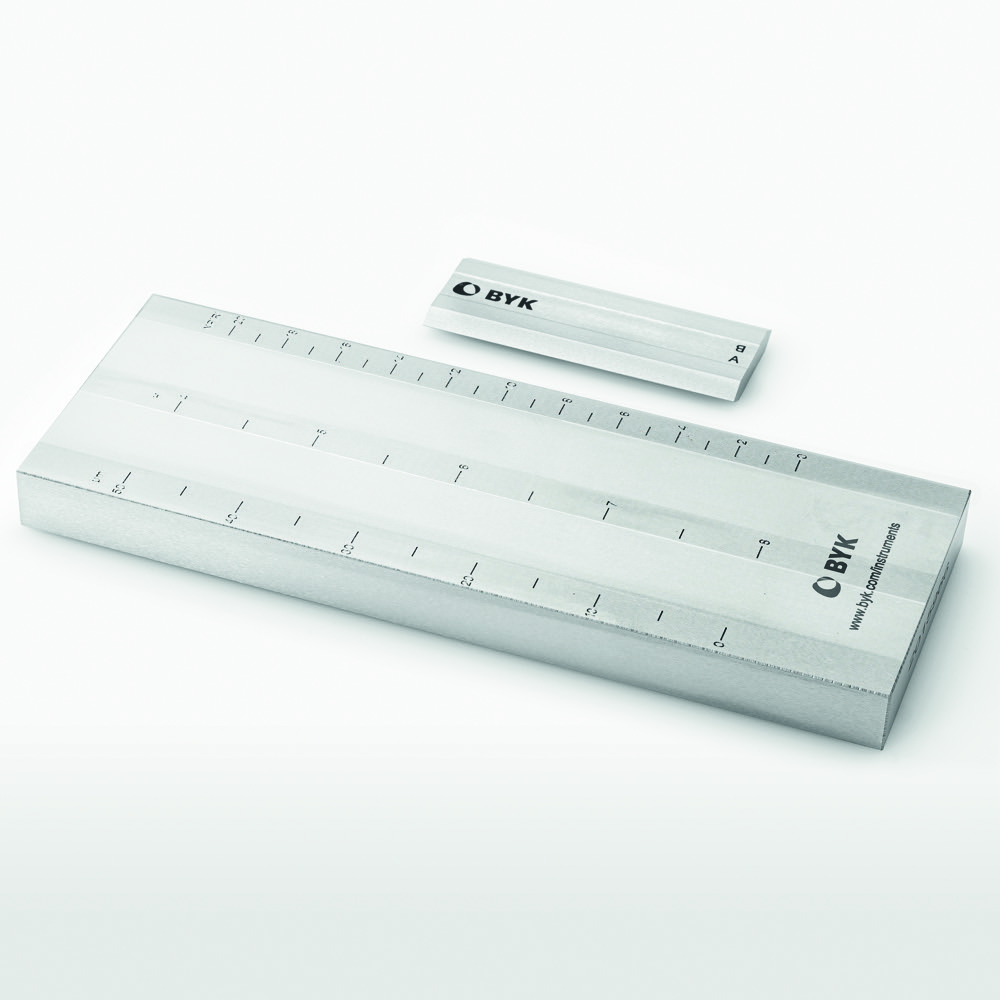
The fineness-of-grind gauge (grind gauge or Hegman gauge) is used to assess how finely a dispersion has been ground and to detect coarse particles or agglomerates — decisive for the quality of paints, inks, pigments and many milled products. It is a flat steel block with two grooves whose depth decreases uniformly from a maximum to zero; drawing the sample down the groove, the point where particles begin to streak indicates the fineness on a Hegman or mil scale. The reading is fast and intuitive, and is widely used to control production, storage and application. All BYK‑Gardner instruments supplied by K&K carry a 12-month manufacturer warranty.
Key Features
- Steel block with uniformly tapering grooves, two paths
- Graduated on Hegman and mil (µm) scales
- Detects coarse particles & agglomerates in a dispersion
- Fast, intuitive reading for production control
- Comes with scraper and case
Key specifications
Specifications
Fineness of grind
| Scales | Hegman & mil |
| Paths | 2 |
| Material | Stainless steel |
| Warranty | 12 months |
Compliant standards
Where it fits
Paints & coatings
Printing inks
Pigments & dispersions
Quality control
Scope of Supply
- Fineness-of-grind gauge (per chosen scale)
- Scraper
- Case
- Manual
Video
Watch demos and how-to guides for BYK-Gardner instruments on the manufacturer's official YouTube channel.