
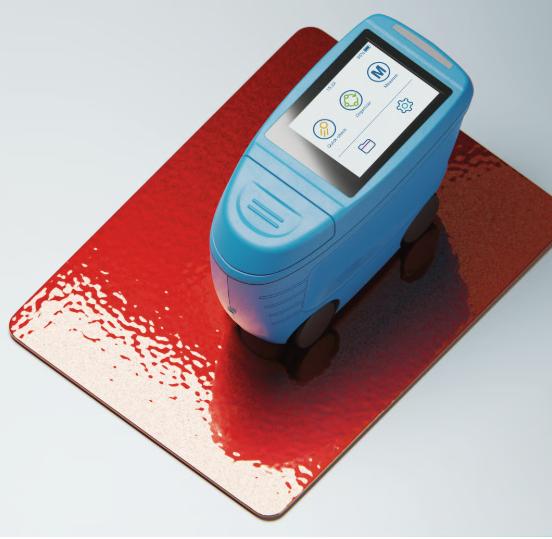
Quick answer: DOI (Distinctness of Image) measures how sharply a reflected image appears on a surface. You need to measure DOI when you make high-gloss coatings where appearance is a competitive factor — automotive paint, coil coating, appliances, premium trim — and when gloss alone is not enough to describe surface quality.
How does DOI differ from gloss?
Gloss measures the amount of specular reflection. DOI measures the quality of that reflection — whether the reflected image is crisp or blurred. Two panels can read the same 20° gloss yet one reflects a light fitting sharply while the other looks "rippled" from surface structure (orange peel). On high-gloss surfaces it is DOI and surface structure — not gloss — that decide whether a finish looks "premium" or "cheap".
When do you need to measure DOI?
- Automotive & refinish paint: body appearance is a top quality criterion; DOI + orange peel are tightly controlled.
- Coil coating: cladding and panels demand a flat, even, uniformly reflective surface.
- Appliances, electronics, premium trim: mirror-gloss surfaces must be consistent batch to batch.
- When customers complain a surface isn't "smooth/deep" even though gloss passes — that's the sign you need DOI.
Which instrument measures DOI?
DOI is usually measured together with surface structure (long wave / short wave / orange peel) using a wave-scan instrument. The BYK-Gardner wave-scan 3 rolls across the surface and analyses the reflected image to give DOI plus the structure metrics, letting you control appearance objectively and compare it across batches, plants and against the car maker's or customer's specification. See also: When do you need Wave-scan?