
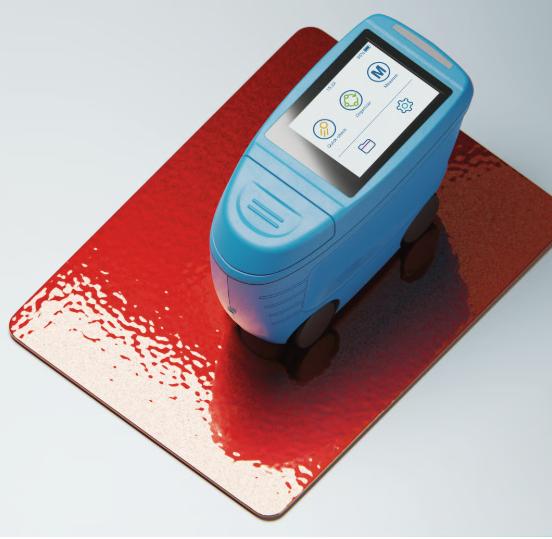
Quick answer: You need Wave-scan when gloss isn't enough to judge appearance — i.e. when a high-gloss surface still shows "orange peel", waviness or poor sharpness. Wave-scan objectively quantifies what the eye perceives.
What does Wave-scan measure?
- Long Wave (LW) and Short Wave (SW): waviness at different wavelengths — coarse and fine orange peel.
- DOI & du: sharpness of the reflected image.
When gloss alone isn't enough
Two samples can have the same gloss yet look completely different. If your customers judge the surface by eye on high-gloss products, gloss alone won't do — you need waviness/DOI.
Which industries need it?
Automotive paint (body, plastics), coil coating, appliances and premium powder coatings — where surface appearance is a quality criterion and acceptance condition.
Frequently asked questions
How is Wave-scan different from a gloss meter?
A gloss meter gives one reflectance number; Wave-scan analyses surface structure (orange peel, waviness, DOI) — two samples at the same gloss can still look different.
Which surfaces is Wave-scan for?
Mainly medium-to-high-gloss surfaces such as automotive paint, coil coating and appliances.
Can K&K demo Wave-scan?
Yes — contact us for a demo on your own product samples.