
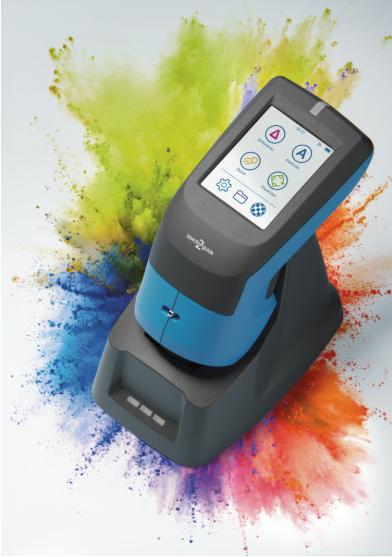
Quick answer: Instead of mailing physical master standards — which fade, scratch and take time — more plants are moving to digital colour standards: storing and sharing colour standards as spectral data between lab, production and customers. It's a direction BYK-Gardner is pushing on its newer instruments and smart-chart software.
The problem with physical standards
A physical master standard (a paint/plastic panel) has three weaknesses: it fades and shifts over time and light; it gets damaged in transit; and it creates lag when samples must be shipped back and forth. Across multi-plant, multi-country supply chains, these slow colour approvals and fuel OK/NG disputes.
How digital standards fix it
- No fade, no scratch: the standard is stored as spectral data, always stable.
- Instant sharing: the lab sets the standard; plant and customer download the same digital standard via software — everyone "speaks the same colour language."
- Traceability & reporting: attach pass/fail tolerances, keep measurement history, export digital QC reports.
The role of the instrument
Digital standards only work when instruments have high inter-instrument agreement, so one digital standard gives consistent results at every measuring point. BYK-Gardner instruments like spectro2guide and spectro2go connect to smart-chart software to set, share and manage digital colour standards and QC data. BYK-Gardner's newer instruments also warn when a sample contains fluorescent components — a factor that easily causes colour drift if missed (see also: What is metamerism?).
A view from K&K Chemical
For Vietnamese plants supplying FDI and export customers, moving to digital standards shortens colour-approval time and reduces disputes. K&K Chemical advises on the instrument + software setup, demos on your samples, with calibration and genuine warranty.