
In automotive refinish, even a small color mismatch can leave a customer unhappy and force a re-spray — costing time, materials and reputation. This article outlines the process for measuring and controlling color so you get a consistent result the first time.
Why the naked eye isn't enough
Judging color by eye depends on the light source, the viewing angle and the observer. Two people can "see" it differently, and the same panel looks different under sunlight versus workshop lamps. With effect colors (metallic, pearl), a mismatch is even harder to spot.
A color-measurement instrument gives an objective number — so the whole shop speaks one "color language" instead of relying on personal perception.
The basic measurement workflow
- Prepare the surface: clean it and make sure it is dry and even before measuring.
- Measure the target: use a spectrophotometer to read the car's standard color at several spots.
- Mix and spray a test panel: prepare the formula, spray a sample and measure again.
- Compare tolerance (dE): if the difference is within the allowed threshold, it passes; if not, adjust the formula and repeat.
Why multi-angle measurement matters
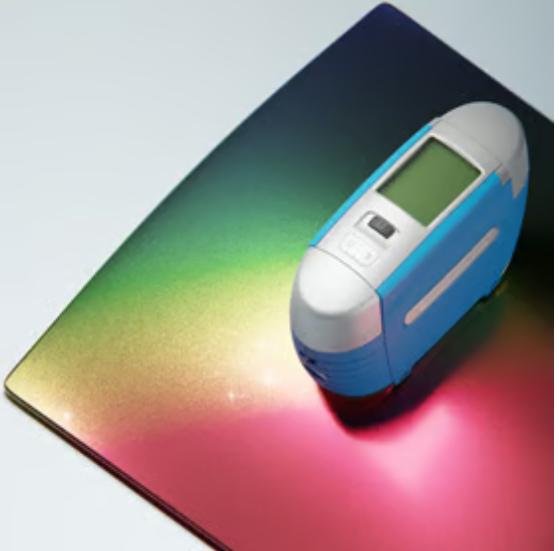
Modern automotive paints often contain metallic flakes, so the color shifts with the viewing angle. A multi-angle instrument measures at several angles to fully describe the effect — something a single-angle meter cannot do. This is why shops and OEMs rely on dedicated instruments such as the BYK‑Gardner range.
Paired with QC software, measurements are stored and tracked over time, catching color drift early before it becomes a bigger problem.